Cold Climate Padel Court Guide: Frost-Proof Design, Heating & Costs 2026
In a cold climate the foundation and the heating strategy decide whether a court makes money in winter. A frost-heaved slab or a frozen turf can shut a court down for months — while a court built to the local frost depth and snow load runs 12 months a year. Get the climate spec right at the design stage and winter becomes your busiest season, not your quietest.
In This Guide
- Why Do Cold Climates Change Every Court Decision?
- How Do Frost-Proof Foundations Beat Frost Heave?
- Which Materials Survive Freeze-Thaw Cycles?
- How Does Snow Load Affect Roof Design?
- How Do Heating Systems Compare?
- How Do Turf, Glass & Safety Work in Winter Operations?
- What Do Cold-Climate Upgrades Cost in 2026?
- What Is the 10-Point Import Checklist for Cold-Climate Buyers?
- Cold Climate Padel Court FAQ

1. Why Do Cold Climates Change Every Court Decision?
Build the same court in Singapore and in Munich and you get two completely different assets. In a cold climate, three forces attack a padel court every winter: freeze-thaw cycles that lift and crack foundations, snow loads that test the roof structure, and de-icing salt and temperature swings that corrode steel and embrittle turf fibre faster than any tropical sun. A court specified for a mild European winter can develop heave cracks in the slab and rust at bolted joints within two seasons.
The market context matters just as much. Germany is now one of Europe's fastest-growing padel markets — club counts and court numbers have multiplied since 2022, and the German federation's registered-court figures passed 3,000 by 2025. The UK, Austria, Poland and the Nordics are on the same trajectory. In all of these markets, winter is 5-6 months of the year and the average temperature sits below 5°C for long stretches. A facility that closes in November and reopens in March loses a third of its year — the exact revenue window when indoor sports are in highest demand. The clubs that win these markets are the ones that planned for winter at the design stage, not after the first frost cracked a slab.
Two decisions drive everything else: the foundation depth (frost heave is the single most expensive failure) and the heating strategy (the biggest ongoing cost). Everything else — materials, roof, maintenance — follows from those two. This guide walks through each in the order a buyer should spec them.
Get a Factory Quote in 12 Hours
Tell us your court count, country and timeline — we reply within 12 hours with factory-direct pricing, shipping and installation options. No obligation.
Prefer an instant answer? Ask the AI assistant at the bottom-right.
2. How Do Frost-Proof Foundations Beat Frost Heave?
Frost heave happens when water in the soil freezes, expands and lifts whatever sits on top of it. A padel court slab is a large, continuous concrete surface — exactly the shape that heave cracks best. A 20m x 10m court slab that heaves even 10-20mm at one corner will crack, misalign the post base plates, and shift the whole structure out of tolerance. There is no cheap fix after the fact: the court has to be lifted and the foundation rebuilt.
The rule is simple: the foundation must sit below the local frost depth, on a drainage layer that keeps water from accumulating under the slab. Frost depth is set by local building codes — in Germany DIN 1054 / EN 1997-1 gives zone-based guidance; in North America local codes follow climate zone maps. Typical values:
| Region | Typical frost depth (design) | Foundation approach |
|---|---|---|
| Germany — north (Hamburg, Berlin) | 0.8-1.0 m | Strip footings below frost line + gravel drainage bed |
| Germany — south / Austria (Munich, Vienna) | 1.0-1.2 m | Deepened footings, insulated edge, drainage |
| Poland / Czech Republic | 1.0-1.4 m | Footings below frost line, compacted gravel sub-base |
| Nordics / Canada / US Midwest | 1.2-2.0 m | Footings below frost line or frost-protected shallow foundation with insulation |
Three details decide whether a foundation actually survives winter. First, the drainage layer: 150-300mm of compacted gravel under the slab, with a perimeter drain that moves water away — waterlogged soil is what makes heave destructive. Second, the slab spec: C25/30 concrete minimum, reinforced with a welded mesh, with expansion joints placed so movement happens where it is designed to, not across a post base. Third, for the coldest markets, a frost-protected shallow foundation (rigid insulation under and around the slab edge) is a proven alternative that can halve excavation cost while keeping the slab heave-free — many Nordic and Canadian tennis and padel projects use it.
Ask the manufacturer for the foundation drawing before you order anything, and have a local engineer validate the frost depth against your municipality's code. A factory that only ships a "standard foundation drawing" without frost-depth options is a factory that has not built for your market.
3. Which Materials Survive Freeze-Thaw Cycles?
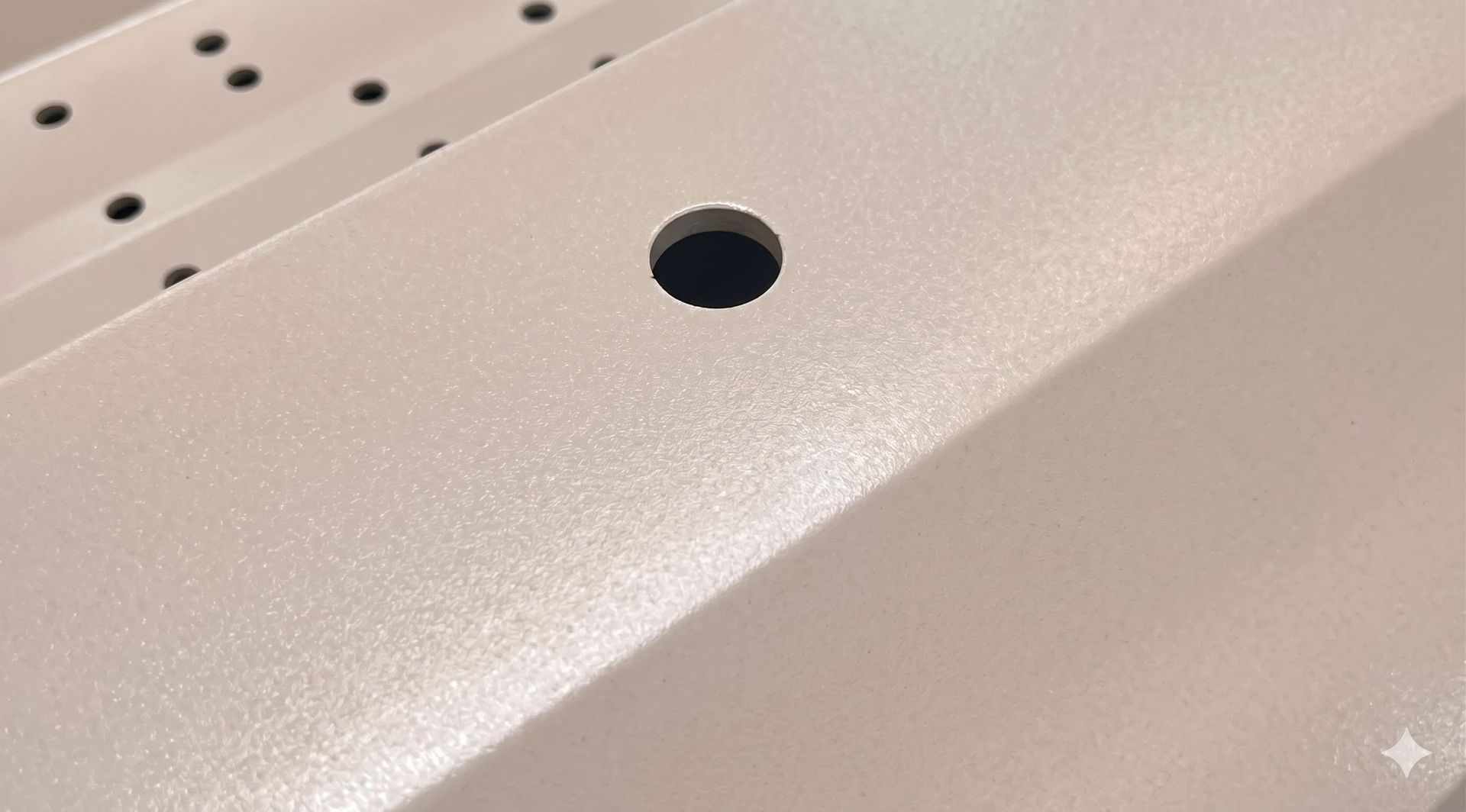
Winter is not a material problem — it is a specification problem. The components that fail in cold climates are the ones where the spec was written for a mild climate. These are the numbers to put in writing when you compare quotes:
| Component | Cold-climate spec to request | Failure if downgraded |
|---|---|---|
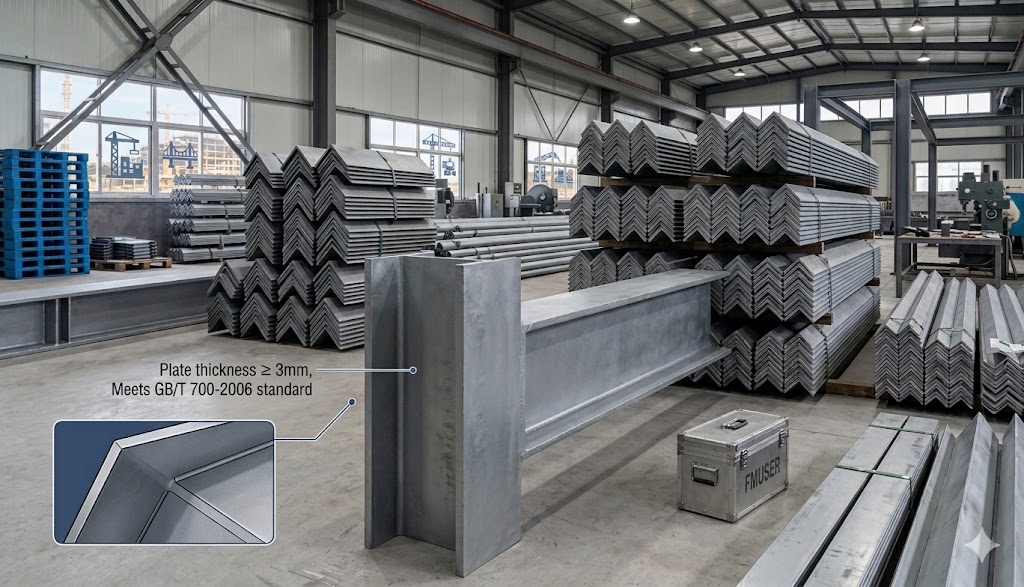
| Steel structure | Hot-dip galvanized, 80-100 µm zinc (Q235B/Q355B), powder-coat top coat; touch-up at all cut edges and bolt holes | De-icing salt + freeze-thaw cycles corrode bolted joints and base plates within 3-5 years |
| Fasteners & brackets | SUS304 stainless steel throughout (bolts, hinges, clamps, net posts) | Galvanized screws are the first failure point in salt-laden winter air |
| Artificial turf | 12mm monofilament or hybrid polyethylene with UV stabilizers; 14-16 kg/m² silica sand infill (sand keeps fibres upright in frost) | Frost embrittles fibre; without sand, fibre mats down and bounce degrades |
| Glass panels | 12mm tempered safety glass (10mm minimum), full-perimeter frames, EPDM seals rated to -40°C | Thinner glass + thermal stress from rapid temperature swings = crack risk; cheap PVC seals harden and leak in frost |
| Roof membrane (if covered) | PVDF-coated polyester 1050 g/m² with high tear strength; install slope ≥15° to shed snow | Light PVC tents sag under snow and can tear at seams under accumulation |
| Coating certificates | Zinc thickness report per batch + salt-spray test results (e.g. ASTM B117) | No certificate = no way to verify the coating that keeps the frame alive in salt conditions |
Two traps appear in most cold-climate quotes. First, suppliers quote "hot-dip galvanized" without a zinc thickness — in winter markets you need the top of the range (80-100 µm) because de-icing salt is corrosive in a way tropical humidity is not. Second, EPDM seals and stainless fasteners are treated as optional extras; in a freeze-thaw climate they are the difference between a watertight court and a court that drips and rusts at every joint. Our padel court materials guide breaks down every component and certificate in detail.
4. How Does Snow Load Affect Roof Design?

If you build covered courts, the roof is the most climate-sensitive structure on site. Snow accumulates, drifts against walls and over the court, and a roof designed for wind but not snow can sag, tear at seams or collapse under a heavy winter. European snow loads are defined in EN 1991-1-3 and are set per country and altitude zone — this is not a "nice-to-have" number, it is a legal design input that your engineer must apply:
| Market | Typical design snow load (ground, EN 1991-1-3) | Roof implication |
|---|---|---|
| Germany — lowland zones 1-2 | 0.65-0.85 kN/m² | Standard steel roof + 15° slope sheds snow |
| Germany — zone 3 / southern highlands | 1.1-1.5 kN/m² | Reinforced roof frame; check purlin spacing |
| Austria / Switzerland / Alpine | 1.5-3.5 kN/m² (altitude-dependent) | Heavy-duty frame, steeper slope, snow guards |
| Nordics / Canada | 1.5-3.0 kN/m² typical | Design for accumulation + drift; engineered purlins |
Three roof rules for winter markets. First, slope ≥15° so snow slides instead of accumulating (drift against a low roof edge is a common failure point — check the local code's drift calculation). Second, snow removal planning: clear snow with soft tools (plastic shovels, brooms) and never let a load exceed the design value while the court is booked. Third, if the court is heated, the roof membrane must handle condensation — warm air rising against a cold membrane will drip onto the turf unless the insulation and venting are designed for it. Our covered padel courts guide compares roof systems in detail, and the indoor requirements guide covers hall-level climate control.
5. How Do Heating Systems Compare?
A covered court without heating is a seasonal asset in a cold market. With the right system it becomes a year-round one — and in winter, heated indoor courts are the highest-demand inventory in the region. Heating a padel hall is not the same as heating an office: a court envelope is a 20m x 10m glass-and-mesh box with a tall air volume, so the system choice drives both the capex and the monthly energy bill. The main options, in order of typical total cost:
| System | Typical cost direction | Best for |
|---|---|---|
| 1. Radiant tube heaters (gas or electric) | Low-medium capex; efficient in tall spaces | Most covered courts — heats people and court, not the whole air volume |
| 2. Warm-air units (gas/electric AHUs) | Medium capex; fast response | Halls used intermittently — warm up quickly before bookings |
| 3. Air-source heat pumps (low-temp models) | Higher capex; low running cost (COP 3-4) | Clubs that run daily and want the lowest energy bill; choose models rated to -15°C |
| 4. Underfloor heating | Medium-high capex; slow response | Courts on heated slabs — best combined with a heat pump for continuous use |
Running cost is where winter markets diverge. A single covered court hall of roughly 300-400 m² total floor area typically needs a heating output in the 60-120 kW range depending on insulation, climate zone and target temperature — and monthly winter energy cost varies widely with local gas and electricity prices, which is exactly why the system choice should be made against your local tariff, not a generic estimate. Two rules apply everywhere: insulate the envelope (a good membrane and sealed doors cut heat loss by 30-50% vs an uninsulated tent), and target a playable 12-16°C rather than office comfort — players warm up fast, and every degree saved is a direct cost saving. PeakPadel supplies the court structure, insulation options and the technical specification for the heating package so your local HVAC contractor can size it to local energy prices.
6. How Do Turf, Glass & Safety Work in Winter Operations?
Even a perfectly built court needs a winter operating routine. The failures here are not structural — they are the small habits that turn a good asset into a damaged one:
| Area | Winter routine | Why it matters |
|---|---|---|
| Turf | Clear snow with plastic shovels or brooms only; keep sand infill topped up; reduce play load on frozen turf | Steel shovels cut fibre; frozen fibre is brittle and mats; sand keeps fibres upright and protects the backing |
| Glass & frames | Clear ice with warm water and plastic scrapers — never salt or metal blades; check EPDM seals for hardening | Salt corrodes aluminium frames and steel fixings; metal blades scratch tempered glass |
| Steel & joints | Monthly rinse of base plates and bolted joints after salt exposure; annual anti-rust touch-up before winter | De-icing salt attacks exactly the joints that keep the structure rigid |
| Lighting | Verify lux levels at the start of the dark season; check IP66 fixtures and seals | Short winter days mean the court runs under lights 12+ hours — poor lighting empties evening bookings |
| Heating & climate | Test the system before the first frost; check condensation management weekly | A failed system in January = closed court in your busiest month |
Operators who run winter courts well treat this as a 10-minute daily checklist plus a monthly deep check, not an annual event. Our padel court maintenance guide has the full seasonal calendar, and the lighting guide covers the lux levels and fixture specs for dark-season play.
7. What Do Cold-Climate Upgrades Cost in 2026?
Base turnkey pricing (structure, 12mm tempered glass, turf, LED lighting, foundation and assembly) varies by specification and market, so treat these as planning ranges, not fixed quotes — your final figure depends on court count, site conditions and the climate package you choose:
| Package element | Typical cost direction vs base court | Notes |
|---|---|---|
| Frost-protected foundation (below frost line + drainage) | +8-15% | Frost depth and soil type drive it; slab is the one item you cannot cheap out on |
| Cold-climate materials upgrade (80-100 µm galvanizing, SUS304, EPDM, winter turf) | +5-10% | Certificates included — zinc thickness and salt-spray reports per batch |
| Heating system (supply spec + local install) | +15-30% | Radiant vs heat pump vs warm-air; local contractor sizing to local tariffs |
| Roof reinforcement for snow load | +3-8% | Only for covered courts in snow zones; engineered to local EN 1991-1-3 value |
| Insulation package (envelope + doors) | +5-10% | Pays for itself in heating season one — cuts heat loss by 30-50% |
Lead times follow the same pattern as any international court project: production roughly 25-35 working days after order confirmation, ocean freight 30-35 days to European ports, then 5-7 days of on-site assembly with a local crew following the 3D assembly manual and video guidance. Request an itemized quotation with the climate package separated from the base court — that is how you compare suppliers on an equal footing. The padel court cost guide and shipping guide cover the base numbers in depth.
8. What Is the 10-Point Import Checklist for Cold-Climate Buyers?
- Foundation drawing with frost depth — validated by a local engineer against your municipality's code, with drainage layer and expansion joints specified.
- Galvanizing certificates — 80-100 µm zinc per batch, plus salt-spray test results (ASTM B117 or equivalent).
- SUS304 stainless fasteners — written into the parts list, not an "upgrade option".
- Winter-rated turf — 12mm monofilament PE with UV stabilizers, sand infill spec for frost resistance.
- Snow-load calculation — for covered courts, the roof design value per EN 1991-1-3 for your altitude zone.
- Heating system spec — output range, fuel type and insulation assumptions, sized for your local tariff.
- Condensation management — insulation/venting design for a heated envelope in winter.
- Winter operations kit — plastic snow tools, ice scrapers, seal inspection schedule in the manual.
- Installation crew plan — cold-weather assembly window, concrete curing requirements below 5°C.
- Warranty in writing — 5-year structural warranty on the steel frame, 10-year on the roofing membrane, with spare-parts service during the term.
Use this checklist when comparing quotations from different factories. Our how to choose a manufacturer guide walks through supplier verification step by step, and the specifications guide is the full technical reference sheet to hand your engineer.
9. Cold Climate Padel Court FAQ
Can you play padel outdoors in winter?
Yes, with the right specification. The court surface itself (turf, sand infill) plays fine in frost — padel was built for compact enclosed courts that shed snow quickly. The limits are practical: clear snow with soft tools, keep sand topped up, and reduce heavy play when the turf is deeply frozen, because frozen fibre is brittle and mats under impact. Many German, Austrian and Nordic clubs run outdoor courts year-round with a simple winter routine.
How deep should a padel court foundation go in a cold climate?
Below the local frost depth — in Germany that is typically 0.8-1.2 m depending on region, in the Nordics, Canada and the US Midwest 1.2-2.0 m. The slab also needs a compacted gravel drainage layer and expansion joints, because frost heave (water freezing under the slab) is the most common and most expensive foundation failure. A frost-protected shallow foundation with rigid edge insulation is a proven alternative in the coldest markets.
Do indoor padel courts need heating in winter?
If you want year-round bookings, yes. An unheated hall becomes unusable for months in a cold market, while heated courts are the highest-demand inventory in winter. Radiant tube heaters are the efficient choice for tall court envelopes; low-temperature air-source heat pumps give the lowest running cost for daily-use clubs (COP 3-4). Insulation is the multiplier — a well-insulated envelope cuts heat loss by 30-50%.
Can artificial turf survive freezing temperatures?
Yes — artificial turf is the most winter-hardy court surface available. Frost makes the fibre stiffer and more brittle, which is why sand infill must be kept at spec (14-16 kg/m²) to hold fibres upright and protect the backing, and why steel shovels are banned for snow clearing. UV stabilizers prevent winter sun degradation, and freeze-thaw cycles do not damage a well-installed, well-drained turf.
How much does it cost to heat a padel court in winter?
It depends on the hall size, insulation, climate zone and — most importantly — your local gas and electricity tariffs. A single covered court hall (roughly 300-400 m²) typically needs 60-120 kW of heating output, and monthly winter energy cost varies significantly by market. Size the system against your local tariff and insulate the envelope first; every degree of target temperature you lower is a direct saving.
Does snow damage a padel court roof?
Only if the roof was not designed for the local snow load. European design values (EN 1991-1-3) range from about 0.65 kN/m² in lowland Germany to 1.5-3.5 kN/m² in Alpine, Nordic and Canadian zones. A roof engineered to its zone — with a ≥15° slope, reinforced frame and drift calculation — handles snow safely. Never let accumulation exceed the design value, and clear with soft tools only.